

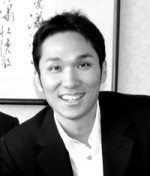
 GARETH ARSTRONG
Since graduating in Drama from Hull University, Gareth Armstrong has combined the roles of actor, director and writer throughout a career that has taken to him to over 50 countries. As an actor he has played in most of the UK’s premier regional theatres, including the Bristol Old Vic, Birmingham Rep and Nottingham Playhouse, where his leading roles ranged from Moliere to Mamet. From an early association with Shakespeare through the National Youth Theatre he has played parts in 20 of Shakespeare’s plays, tackling such diverse parts as Romeo and Richard III, Puck and Prospero. He has been a member of the Royal Shakespeare Company and worked at Shakespeare’s Globe. In the West End, he has featured in plays by Coward, Stoppard, Agatha Christie and most recently appeared in Yes, Prime Minister.
Gareth was a founder Artistic Director of two innovative theatre companies in his native Wales – the Made in Wales Stage Company, presenting new Anglo-Welsh plays, and Cardiff’s Sherman Theatre Co., where he directed classics, new plays and the modern repertoire. As a freelance he has directed in theatres all over Britain and has worked as a guest director in Europe and America. He was an Associate Artist at Salisbury Playhouse, and works as an Associate Director of the US based company, AFTLS, which tours and teaches Shakespeare in campuses across the States.
After playing the role in The Merchant of Venice, directed by Jonathan Church, he wrote and performed in his own one-man show, Shylock, and toured it internationally for ten years. The play, which has won international awards, has been translated for the stage into Italian, Spanish, French, Russian, and Hungarian, been filmed for Dutch television and broadcast on Romanian radio where it won an award for the best radio play of the year. He now specializes in directing other solo performers and has dramatised Oscar Wilde’s De Profundis in his play Wilde Without The Boy.
As well as examining in Speech and Drama subjects Gareth has promoted the work of British poets and playwrights for Trinity College in lectures and workshops in Europe and New Zealand. In America he gave the prestigious Morrin Memorial Lecture at Washington University, St. Louis. He has worked with students at the Bristol Old Vic Drama School and London’s Royal Central School of Speech and Drama.
His published works include two theatre books: A Case for Shylock – Around the World with Shakespeare’s Jew, which has a foreword by Judi Dench, and an instructional book for actors, So You Want To Do A Solo Show. (Nick Hern Books)
Gareth has also recorded voices for video games, narration for documentaries on TV and hundreds of audiobooks. On radio he is an occasional contributor to From Our Own Correspondent and has been heard in scores of radio plays, features, and poetry programmes. He also played three running characters in Radio 4’s The Archers.
You are a classically trained actor, specializing in Shakespearean plays. How did you become interested in performing audiobooks?
I’ve been a voice actor since I was 12 and always loved audio. Any actor needs lots of work options, and although I now mostly direct in the theatre and do academic work, I am lucky enough to get offered plenty of audiobooks to record.
How do you prepare to record an audiobook? Do you have any special tricks to make it easier and more successful?
Like all narrators I read the book and mark up the text so I know which character is speaking and how they might sound. Nowadays I work only my iPad which has a special App that makes annotation that much easier.
How has your Shakespearean background helped your audiobook performances?
You need lots of breath when recording, especially as so many authors write very long sentences. Years of speaking Shakespeare in large auditoriums gives you lots of lung capacity, and that comes in very useful.
Your Wikipedia page (how many audiobook narrators have Wikipedia pages?!?) states, “He has also toured to over fifty countries and all over the United States with his own one-man show, Shylock, in which Shakespeare’s principal Jewish character is seen from the viewpoint of Tubal, the Bard’s only other male Jewish character and Shylock’s only friend in the original play. The play has won awards in New Zealand, Canada, Spain and Germany and been translated into Catalan, Spanish, Italian, French and Russian as well being performed on Dutch television and Romanian radio.” Tell us about this show.
Oh that question is too hefty to handle here. But anybody really interested might like to go to Amazon and get a book I wrote about the whole experience called A Case for Shylock – Around the world with Shakespeare’s Jew. It’s no longer in print but there are lots of inexpensive second hand copies around I suspect. And it has a foreword by Judi Dench (who incidentally LOVES audiobooks).
You are about to record your 50th Maigret book by Georges Simenon. You were already a big fan of the books before you started recording them. What draws you to these books?
I just love the way Simenon conjures up the Paris of his period, and Maigret himself is such an intriguing character – tough yet compassionate. The plots might seem a bit straightforward to fans of modern crime fiction, but they’re full of atmosphere.
The Maigret books contain such a wide range of characters. How do you decide on the voices you give to each of them?
We made a decision not to use French accents in the readings, so I use regional UK accents to differentiate the characters’ locations and status. Maigret himself is a big man so he gets a deep baritone voice and speaks what we call Received Pronunciation or Standard English.
Before you started doing the Maigret series, what kind of research did you do into the books and/or author to prepare for the role?
I have been steeped in the world of Maigret since watching a UK television adaptation, which was in black & white! I came to the books later. A few trips to Paris over the years, not connected with the recordings, also helped. I also read some of Simenon’s non-Maigret novels which are terrific too, if a bit bleak about French provincial life.
Some narrators work with a director, while others don’t. What exactly is the director’s role? Do you use a director?
For Maigret I have a wonderful director, Paul Kent, who speaks excellent French so helps me with the tricky pronunciations of places and people. I wouldn’t do the work without him. Often you work with studio managers who have not even read the book beforehand, so then you’re really on your own and need to be certain about researching and preparation. I’m always grateful for someone to help.
Of all the over 260 audiobooks you have recorded, which ones stand out to you as most memorable?
Good heavens! I’d no idea I’d recorded so many – but then I have been around for quite a while. My favourite book of all time was a non-fiction book called Black Diamonds by Catherine Bailey. It’s social history about an English family that went from huge riches to relative poverty in one generation. Fascinating stuff and it has more reader reviews on Audible than any other book I’ve read. Listeners seem to like it too. I’m currently working on a trilogy of books called The Duncton Chronicles, each of which lasts over 24 hours, so that’s proving an exciting challenge.
Of all your performing accomplishments, of what are you most proud?
I think it would be my stage work in Shakespeare. I’ve loved playing Richard 111, Macbeth, Prospero, and especially Shylock. The stage and Shakespeare are my first and greatest working passions.
To learn more about Gareth, visit the following sites:
http://www.garetharmstrong.com
Wikipedia page
Audible page



Thank you for this interview!
Gareth Armstrong is my favourite male narrator and Barbara Rosenblatt my favourite female narrator, though of course there are other fine narrators out there. It’s wonderful to hear Armstrong create a whole world for listeners, and his comments here make me want to check out Black Diamonds and The Duncton Chronicles.
what a wonderful narrator
Especially when reading Maigret
He changes his voice with each character.
When I listen to his audio books, I find his voice coupled to Michael Gambons image is second to none