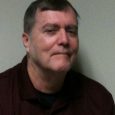
Jack Knapp.com/ grew up in Louisiana and joined the Army after graduating from high school. He served three tours in Germany and traveled throughout western Europe before retiring. His current circle of friends and acquaintances, many of them fellow members of Mensa, live on every continent except Antarctica. Jack graduated from the University of Texas at El Paso before beginning his second career, teaching science.
Always an avid reader, he took naturally to writing. He’s experimented with ESP (The Wizards Series) and woodcraft/survivalism. The deep woods of Louisiana were his playground, the setting for his Darwin’s World Series. He’s a knight of the Society for Creative Anachronism, so combat scenes involving swords, spears, and bows and arrows are reality based.
Recent novels examine the challenges humanity will face when we begin to spread out into space. Beginning with a startup company building the first practical spacecraft (The Ship), to growing a business in space while overcoming Earth-based obstacles (NFI: New Frontiers, Inc), to humanity’s first contact with a non-human species (NEO: Near Earth Objects and BEMs: Bug Eyed Monsters) the novels are largely based on current events. A fifth novel in the New Frontiers Series, MARS: the Martian Autonomous Republic of Sol, was published May 2017.
Jack’s boundless imagination is evident in all his books.
How imaginative? You’ll have to read his novels to find out!
What got you interested in writing fiction?
I’ve been reading fiction a very long time, since 1948! I discovered my father’s collection of Zane Grey’s western magazines and discovered reading. From there, I began reading science fiction as well as other genres. As to why I started writing, at age 73!, I was bored. Couldn’t leave the house, not even to work in my woodshop, because my primary duty was taking care of a disabled and terminally ill son. I published my first novel, Combat Wizard, the day after he died.
What draws you to the genre of science fiction?
Imagination, and my background in science. I was a missile tech during my Army career, the Nike-Ajax, Nike-Hercules, and Hawk missile systems, and after I retired, I taught middle-school science. I’m also an amateur scientist with interest in a number of fields. My science fiction is ‘hard-SF’, because it’s either extrapolation from current events and trends or the results of my own work. I’ve discussed my theories with professional scientists and engineers, some of whom are fellow members of Mensa. To this point, no one has shown an error in my thinking. Economics are fairly standard, which helps with realism, but I admit that when I started designing the perfect political system (in MARS), I departed from reality!
Your Darwin’s World Series starts with a man from the future being sent to the late Pleistocene era. What was your greatest challenge in envisioning survival in the far past?
I had no problem imagining that. I spend my childhood roaming the woods of western Louisiana. My friends and I made our own bows and arrows and bird traps, so the descriptions are absolutely accurate. Toss in a lifetime’s interest in outdoor sports and medieval recreation, including armored combat and blacksmithing, and I found it quite simple. The only research-based parts had to do with pleistocene animals, climate, and paleogeography. I studied biology, physics, and geology at UTEP, so I had no problems understanding it.
In book 4 of the Darwin’s World Series, you suddenly shift to the future and a space opera. What made you create this shift within one series?
It was inherent in book one. I needed a way to put my protagonist there, and a reason. The reason is based on extrapolation; I’ve noticed that people are interacting more via electronic means nowadays. Everyone is constantly on a cell phone (except me; for the most part, mine is switched off!) or on social media, so I simply extended it. I suspect the trend will continue. Add in a kind of ubiquitous Internet called Central, mechanical servitors and companions, and the result might well be a decline in population.
So beginning at the end of the third book, Home, I transitioned to the people who had sent my protagonist into a version of the past. It’s not THE past, by the way; it’s an alternate dimension. More hard science, mixed with math; if there’s a choice, then a choice will be made. This creates two parallel dimensions, and since it happens constantly, there are uncounted numbers of them. In Darwin’s World, humans never survived. The giant mammals weren’t wiped out, so Matt and his friends have a new Eden all to themselves. As to the threat, I turned to biology; imagine a giant frog, intelligent, that can ensure that most of its eggs hatch and survive. How long to overpopulate an entire world? Toss in space travel, you have the antagonist from Defending Eden.
Your New Frontiers series examines humanity’s moving to space. What types of challenges do your characters face?
Economics, for one. Rockets are costly and inherently limited, so I invented a ‘suspend-disbelief’ space drive. Everything else follows logically. Pressure from established industries? Frantic efforts from foreign governments to get their own version (think Manhattan Project; the Russians had the bomb soon after we did, because THEIR spies were more capable than my fictional ones). The need to actually earn money. Elon Musk, etc, is doing it by hauling cargo to space, but my fictional non-explosive drive could dispose of high-level radioactive waste. A diesel engine that runs in space? Absolutely; inject oxygen as well as diesel fuel, voila. Cool it by expanding exhaust gases? Absolutely. Use the ‘spent’ fuel rods as heat for a generating system? Why not? Luna has what Earth doesn’t, waste land that won’t ever be used by humans. Radiation isn’t an issue. As for the tunneling machine that seals the tunnel behind it, I saw an article describing one that I think is already being used. I improved it, but other than that, it’s pretty much what I read of.
You draw inspiration for your New Frontiers series from current events. Can you give us an example or two?
One serious current problem is what to do with high-level nuclear waste. Nuclear reactors in the US alone produce more than 2000 metric tons a year, and it ends up stored on site because there’s no place else to put it; it will be dangerous for a quarter of a million years. We toss big numbers around, but recall that human civilization is less than 50,000 years old. By some accounts, far less. Fiction allowed me to deal with it, first by launching it toward the sun, then turning a danger into opportunity.
The second is climate change, and my fictional solutions are rapidly being overtaken by reality. Some of it is my original work, the realization that most of the greenhouse effect happens in the world’s hot deserts, and investigating a practical solution, ground-mounted reflector panels. I set mine up in the corral where I once kept horses and measure the temperature difference between unshaded ground (the control) and the shaded ground under the reflected panel. I got 38ºF; the solar energy that didn’t heat the ground was reflected back to space. So my part of the solution is controllable, cheap, and given the will, doable right now.
There’s also overpopulation, resource distribution, and always the remote threat that a ‘dinosaur-killer’ asteroid will strike, ending most life on Earth. It’s happened a number of times in the past; there’s no reason to assume it can’t happen in future. So if we humans want our version of intelligence to survive, we need more than one planet.
Your Wizards Series focuses on ESP. What drew you to this phenomenon?
Personal experience, to start; bored young soldiers, SF readers, sitting around talking about a Heinlein book that mentioned Rhine’s work. We didn’t have his specialized deck of images, but we had playing cards. Telepathy? One looks at a card, the others write down what he’s thinking about. The reality didn’t match calculated odds. Then we tried precognition, guessing which card in a deck would come up next. Get it right, card and suit, try again. Odds, one trial, one in 52; two trials, you get into factorial math and the odds mount quickly. During one stretch, I ran ten straight. Mathematically, that’s so unlikely as to be impossible. I could never do it again, but I consistently do better than what the math suggests. Toss in the NSA/CIA’s research project, add a bit of current events (Artificial Intelligence and computer-assisted learning), and you’ve got the background for the Wizards series.
You are a knight in the Society for Creative Anachronism. What is that, and how does it help your writing?
Knights in the SCA are experienced in a number of weapons systems and adjudged by their peers, other knights, to be competent. SCA fights are not choreographed; there are rules designed to keep the fighters safe, but bruises are common and broken bones not unknown. We wear armor and fight using rattan weapons for the most part; swords are roughly the same weight, and rattan ‘mushes’ instead of breaking off, leaving a sharp point that might injure an opponent. Armor is designed to protect vital areas (head, neck, joints, groin, kidneys, etc). SCA fighters, along with other recreationists, have done extensive research into armor and weapons; as a result, you can now buy a functional, historically accurate, suit of armor or partial armor that’s at least as good as what old-time knights had. Some fight on foot (which is what I did for the most part), but some also investigate mounted arts. I did that briefly, but training horses to face someone coming toward them with a long pole in his hand? VERY difficult! And expensive!
SCA combat is physical; eventually, joints become damaged. I’ve had one knee replaced, my son has had one, some I know have had both replaced.
You are a member of Mensa. Do your fellow members help with your ideas?
No. I’ve put my ideas forward, but the kind of critical examination I was looking for isn’t there. I’ve been disappointed by Mensa; I expected more. I’ve met people through Mensa that I like and consider friends, but I don’t socialize with US Mensans for the most part. I’m not interested in gaming or puzzles (reality is so much more challenging!), so other than having qualified, as they did, by scoring above a cutoff point, we don’t have a lot in common.
I was a moderator after I joined, working with international Mensa; I met some nice folks that way, and some not so nice. Eventually I started my own Facebook group. Roughly half are Mensa, others are people I thought might be interesting. Around a third are foreigners, mostly European. It’s limited to less than 200 persons, so membership is invitation-only. We occasionally have good discussions, most are fairly commonplace. It led to an invitation to join a French group of older Mensans, which is interesting because the discussion is in French!
What authors have most influenced your writing career?
Heinlein was a major influence, but I can’t go back and read his novels now. I’m more critical than I was when I first read them! I attended Bubonicon in Albuquerque earlier this month, met a few authors, have joined others on their Facebook pages (S. M. Stirling, Walter Jon Williams, T. Jackson King). I met Tom King at Bubonicon (he was a panelist) and we talked; he’s a fan of my New Frontiers series and wanted to know when the next book will be finished!
To learn more about Jack visit thr following sites:
Amazon author page
Facebook
http://jacklknapp.com/